Prepare before the brush
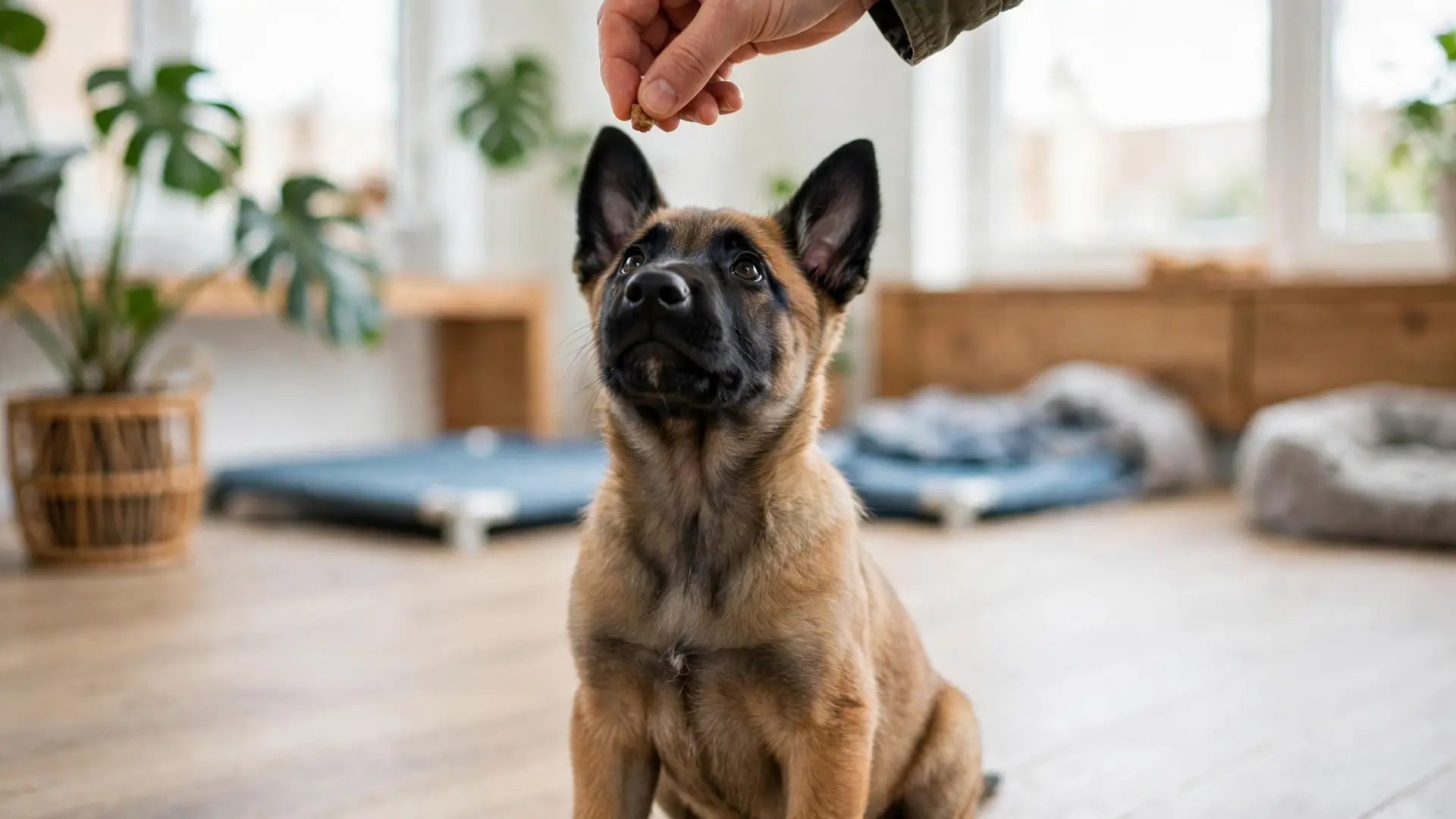
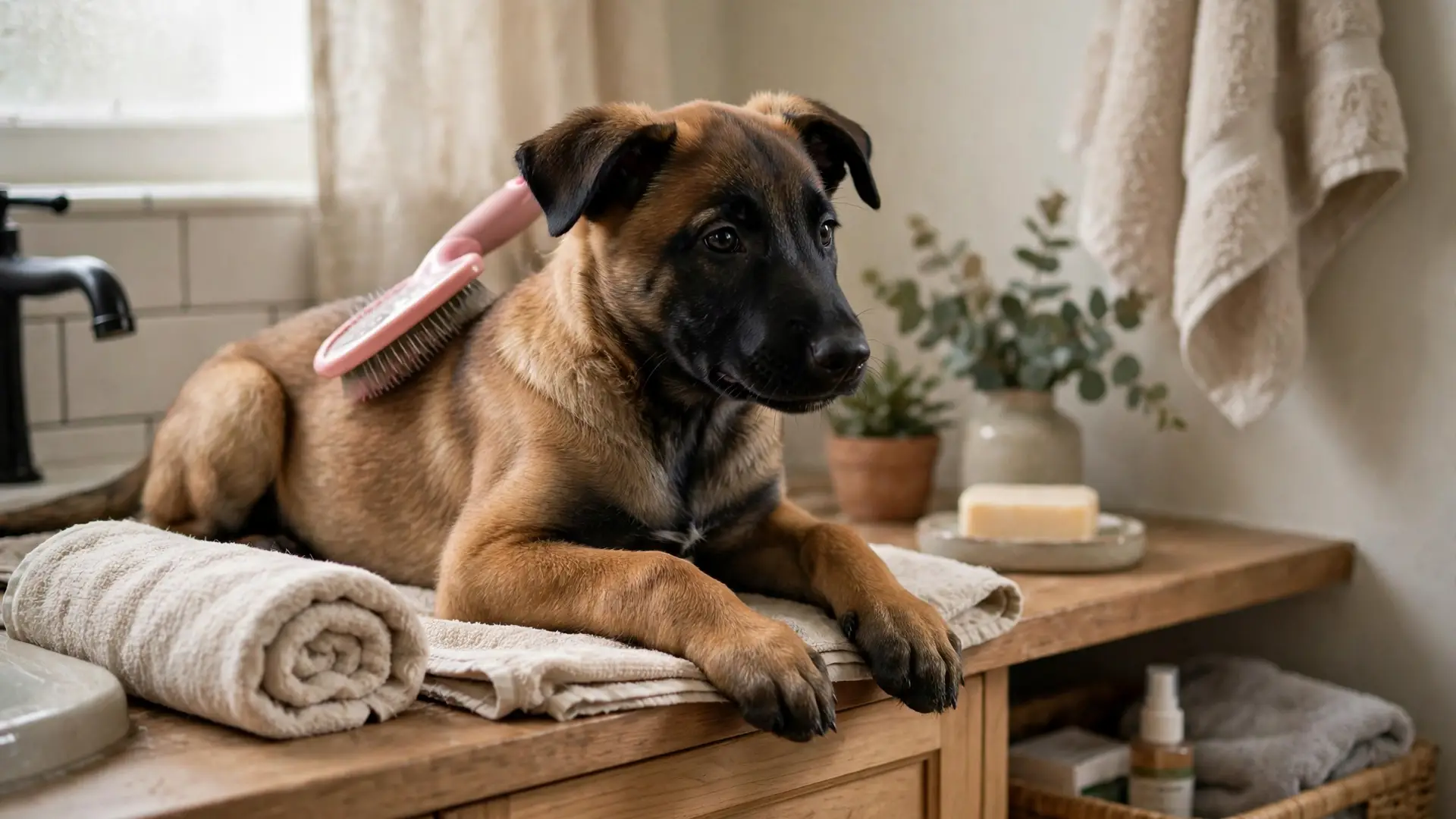
Comfortable grooming begins before the brush touches the coat. Choose a quiet, non-slip location and let your dog investigate the tools. Reward looking at the brush, approaching it, and remaining relaxed nearby. Break each task into very small steps. Touch the shoulder, reward, and pause. Lift a paw briefly, reward, and release.
Read body language
Watch for turning away, lip licking, lowered posture, pinned ears, trembling, growling, or attempts to leave. These signals ask for more space or an easier step. Do not punish communication. Stop, reassess, and continue later at a level your dog can manage.
Use gentle equipment
Use equipment suited to the coat and task. Pulling through mats can hurt, and damaged skin may be hidden beneath dense fur. Ask a qualified groomer or veterinarian for advice if you are uncertain about tools, matting, nail length, or ear care.
Create predictable patterns
A start cue can tell the dog grooming is about to begin, while a release cue clearly ends the session. Introduce clippers, dryers, and nail tools without using them first. Let the dog hear the sound from a comfortable distance, pairing it with excellent food over several short sessions.
Watch for pain signals
Sudden sensitivity may indicate pain, infection, skin disease, dental discomfort, or another medical issue. Stop and contact your veterinarian if behaviour changes unexpectedly or handling appears painful. Sedation should only be discussed with and provided under veterinary direction.
Small success counts
Cooperative care takes time, especially for dogs with difficult histories. Progress may look like one comfortable paw touch or three relaxed brush strokes. Those successes matter. This guide is educational and cannot replace advice, diagnosis, or treatment from your veterinarian.