A safe den, not a cage
A crate can be a wonderful tool: a safe den for rest, a calm place during busy moments, and a familiar space for travel. The key is that the puppy must love it. A crate your puppy is forced into becomes a source of stress, while a crate they choose becomes a comfort. This guide builds positive associations step by step, at your puppy’s pace.
Make it inviting
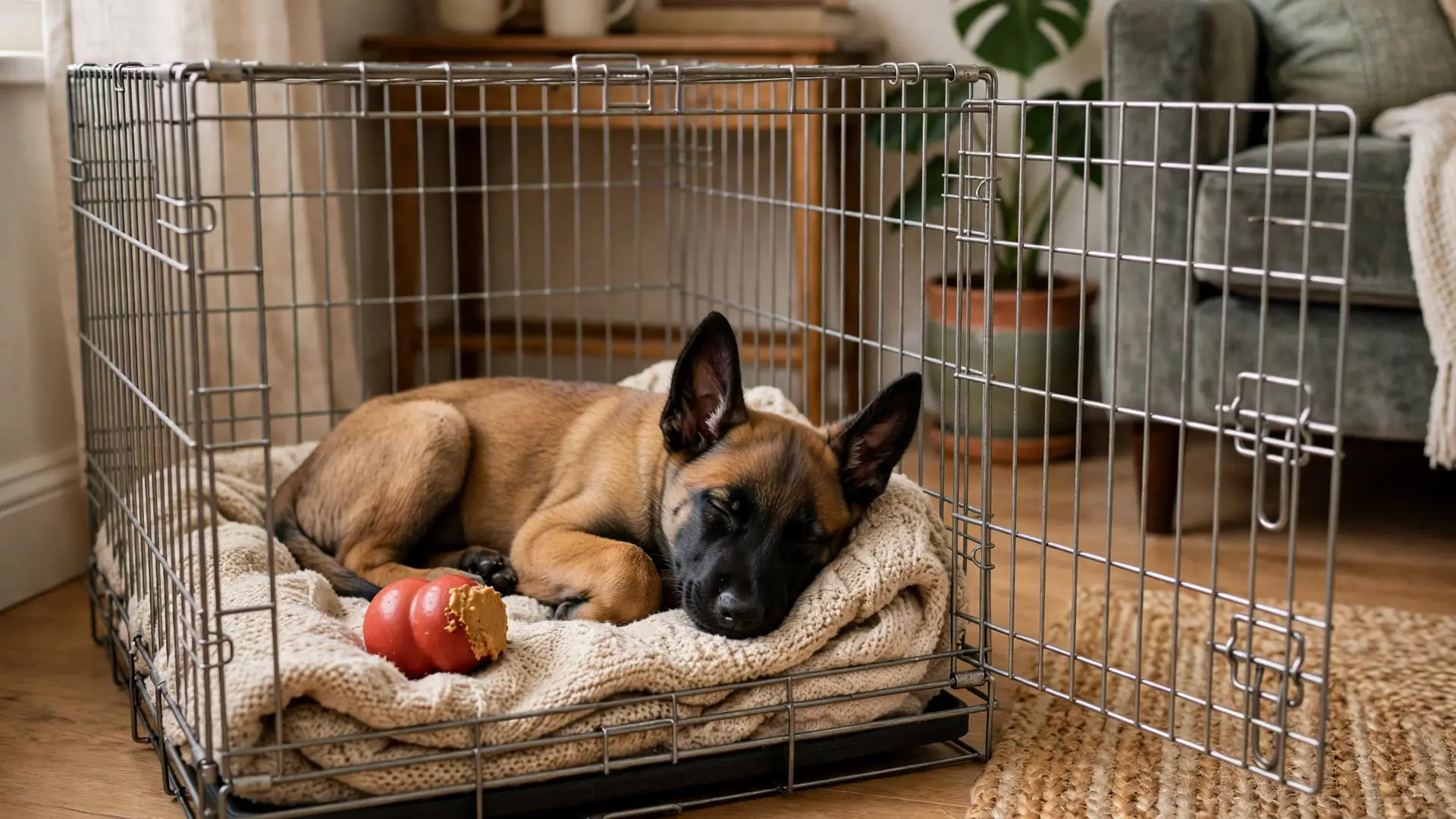
Set the crate in a quiet corner of a family room, door open or removed, with soft bedding and a worn t-shirt that smells like you. Scatter treats inside and around it, and feed a stuffed food toy in there, letting your puppy wander in and out freely. Cover part of the top with a light blanket to make it den-like, leaving the front open and airy. Never push your puppy inside.
Feed meals inside
Serve meals in the crate with the door open. When your puppy trots in happily for dinner, begin closing the door for a few seconds while they eat, then open it again before they finish. Gradually extend the closed-door time after meals, staying nearby and calm. If your puppy fusses, you moved too fast: go back to the last easy step and progress more slowly.
Build up slowly
Practise short, pleasant absences. Close the door, sit nearby reading, then let them out before they worry. Slowly increase the time and your distance, always returning before your puppy gets distressed. Keep arrivals and departures boring: no big hellos or goodbyes. Most puppies nap happily in the crate once the association is built, especially with a safe chew.
Crate rules to live by
Never use the crate as punishment, and never leave a puppy crated so long they cannot hold their bladder: a rough guide is one hour per month of age, up to about four hours, plus toilet breaks. At night, place the crate near you at first so you can hear when they need to go out. With patience, many dogs keep loving their crate as a private den for life.
Vet disclaimer
This guide shares general training information only and is not veterinary or behavioural advice. If your puppy panics in the crate, injures themselves trying to escape, or shows ongoing distress, stop and contact your veterinarian, who can rule out medical causes and refer you to a qualified behaviour professional.