Why loose-leash walking matters
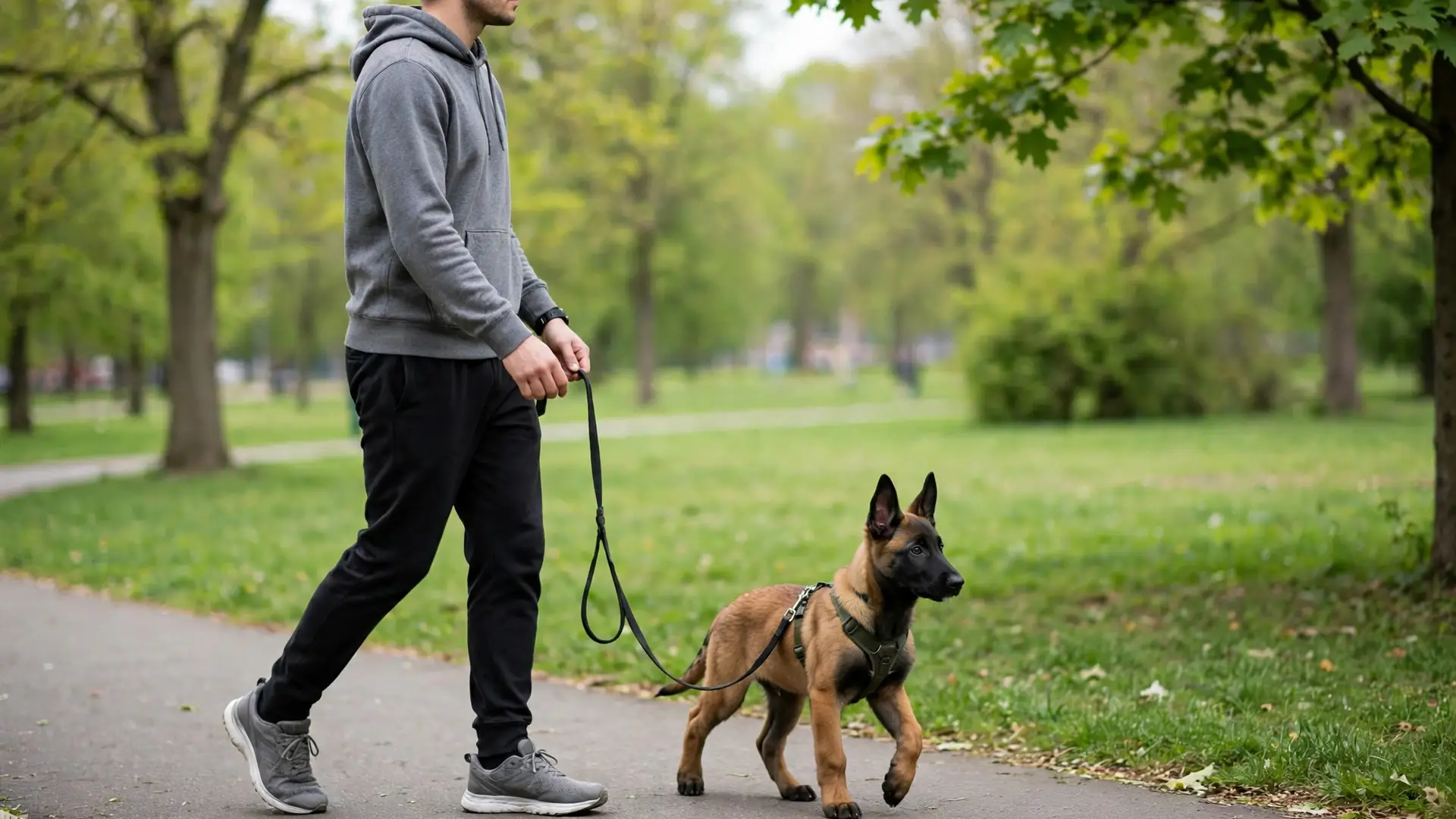
A puppy that walks nicely on a loose lead makes every outing more enjoyable, for both of you. Pulling is natural for dogs: they walk faster than we do, and the world is full of fascinating smells. Your goal is not a robotic heel but a relaxed walk where the lead hangs in a soft curve. This takes patience, especially with an excitable puppy, but every calm step you reward builds the habit.
Start with the right equipment
Use a well-fitting harness that does not restrict the shoulders, plus a standard flat lead of one to two metres. Let your puppy wear the harness indoors first, pairing it with treats, so it predicts good things. Avoid choke chains, prong collars, and slip leads used as corrections: they can cause pain and fear, and they teach the puppy nothing about where you want them to be.
Reward the position you want
Begin somewhere boring, like your hallway or garden. The moment your puppy is beside you with a loose lead, mark it with a cheerful “yes” and deliver a treat at your side, not out in front. Take a few steps; reward again while the lead is still loose. You are paying your puppy for choosing the right place to walk. Short sessions of three to five minutes are plenty.
When they pull
If the lead goes tight, stop walking or calmly turn and walk a few steps the other way. When your puppy catches up and the lead loosens, praise and move forward again. Forward movement becomes the reward for a loose lead. Never yank the lead or drag your puppy; it damages trust and can injure their neck. If your puppy is too excited to think, increase distance from the distraction or practise in an easier place.
Let them sniff
Let your puppy sniff on walks. Sniffing is how dogs read the news, and a walk with sniff breaks is far more tiring, in a good way, than a march with none. You can use a cue like “go sniff” to allow it, then “let’s go” to move on. Puppies have short attention spans, so end before they get silly, and remember that mental tiredness counts as much as physical exercise.
Vet disclaimer
This guide shares general training information only and is not veterinary advice. If your puppy coughs, limps, or shows breathing difficulty on walks, or if pulling is sudden and new, contact your veterinarian. Choose equipment and exercise levels suited to your puppy’s age, breed, and health, and ask your vet if you are unsure.