Why night walks need planning
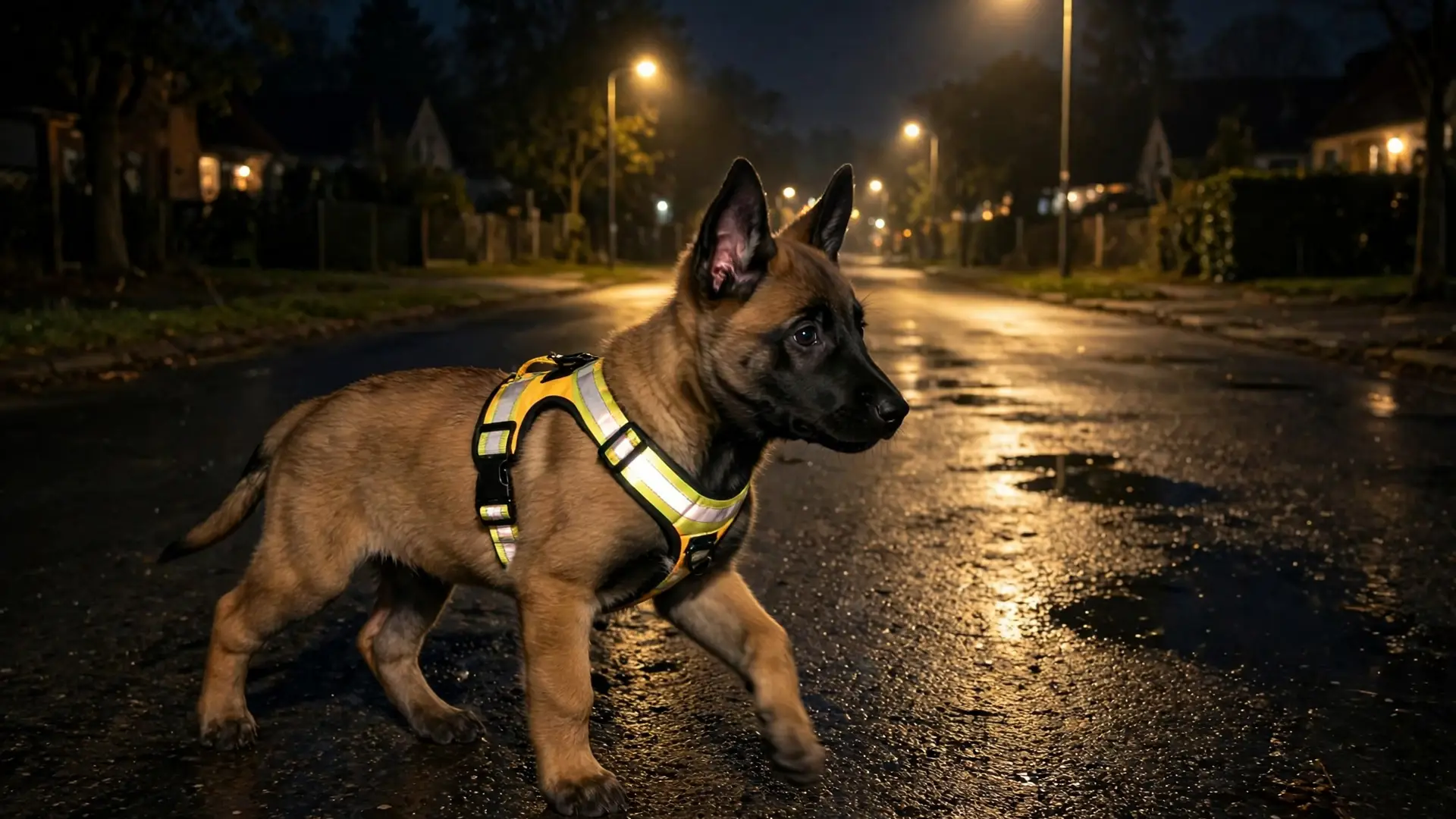
As the evenings draw in, many of us find ourselves walking our dogs in the dark, whether for the last outing of the day or a full evening stroll. Night walks can be wonderfully peaceful: quieter streets, cooler air, and a dog who is often calmer without the daytime bustle. But darkness hides hazards that daylight reveals, from uneven pavements to off-lead dogs you cannot see coming. A little planning turns the night walk from a worry into one of the best parts of your routine.
Be visible
Visibility is the golden rule of night walking. Fit your dog with a reflective harness or collar, add a clip-on LED light to the harness or collar, and consider a light-up lead for extra presence. Wear something reflective or bright yourself, and carry a small torch to light up pavements, signal to traffic, and check what your dog is sniffing. Drivers, cyclists, and other walkers should be able to spot the pair of you from a good distance, in every direction.
Choose safe routes
Pick routes you know well and can navigate almost by memory. Favor well-lit streets, parks with lighting, and paths you have walked in daylight first. Avoid unlit shortcuts, areas with broken glass or litter you cannot see, and roads without pavements where traffic might not spot you. Vary your route sometimes for enrichment, but always scout a new route in daylight before trying it after dark. A familiar path lets you relax and lets your dog enjoy the symphony of night smells.
Keep them close
At night, a shorter lead is a safer lead. Keep your dog close enough that you can see and reach them at all times, and save the long line or off-lead freedom for daylight. Practice recall regularly so it stays sharp, and use a collar or harness your dog cannot slip in a moment of surprise. If your dog is reactive or nervous, extra distance from other dogs matters even more in the dark, when everyone is harder to read.
Wildlife and surprises
Night brings out a different cast of characters: foxes, hedgehogs, cats, and the occasional startled jogger. Keep an eye ahead with your torch and give wildlife plenty of space, both for their safety and your dog’s. A sudden rustle in a hedge can trigger a lunge, so hold the lead securely and reward calm behavior generously. If your dog finds something interesting on the ground, check it with your torch before they eat it: darkness is excellent at hiding dropped food and worse.
Vet disclaimer
This guide offers general information only and is not veterinary advice. If your dog is anxious after dark, has deteriorating eyesight, or you notice any change in their confidence on walks, please speak to your veterinarian. With the right gear and a familiar route, most dogs come to love their night walks just as much as daytime adventures.