Nutrition builds lifelong health
Good nutrition in the first year builds the foundation for lifelong health, especially for growing bones and joints. The simplest safe choice is a food labelled complete and balanced for puppies or for all life stages, from a reputable manufacturer. It should state that it meets recognised nutritional standards for growth. Avoid switching foods suddenly: any change should be gradual over seven to ten days.
How much and how often
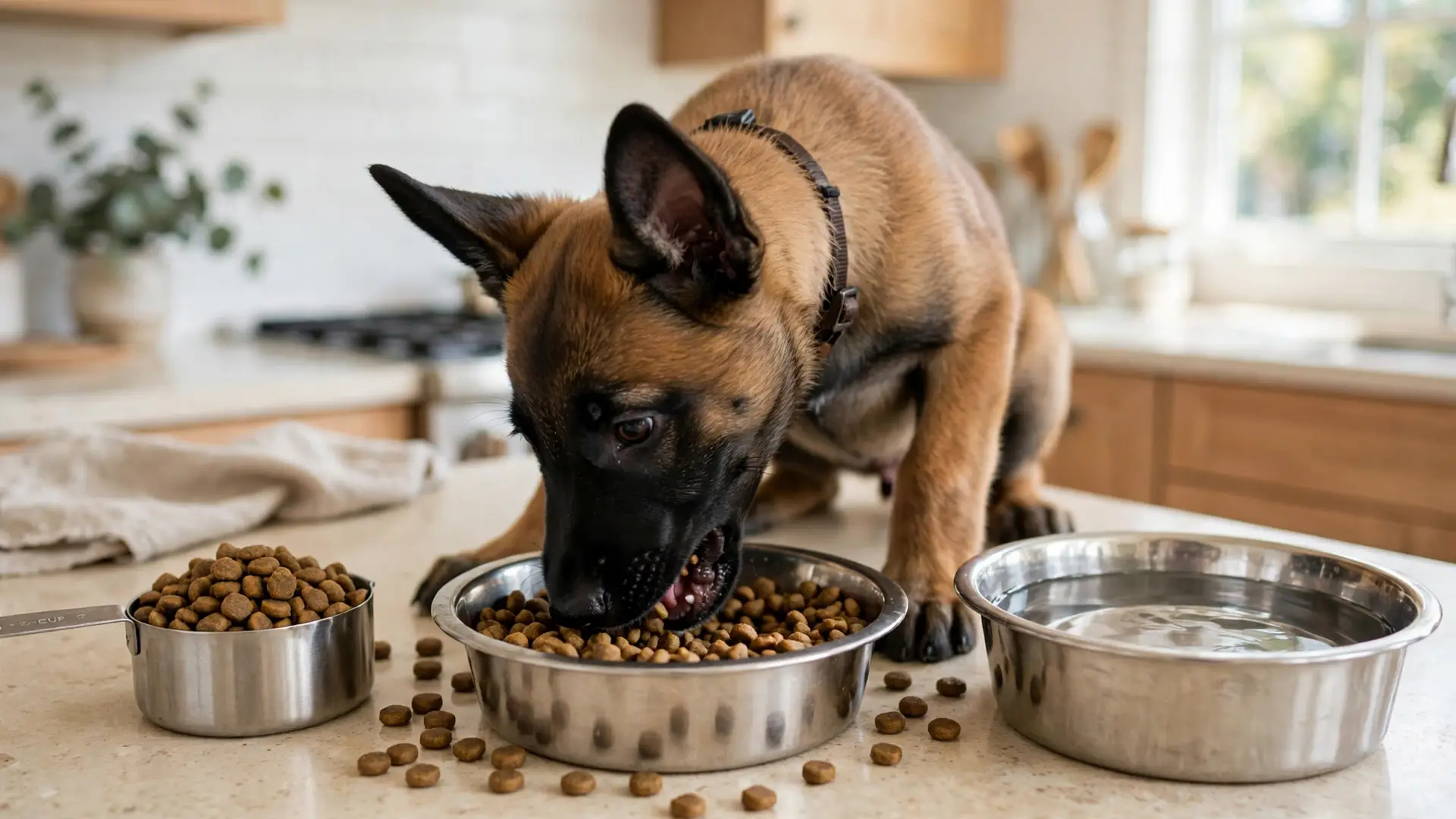
Follow the feeding guide on the packet as a starting point, then adjust so your puppy stays lean: you should be able to feel the ribs easily under a thin covering. Young puppies usually eat three to four small meals a day, dropping to two meals around six months. Weigh your puppy regularly and keep a simple growth record to share with your vet, who can fine-tune portions.
Treats and extras
Treats are training gold, but they count as food. Keep treats and extras to about ten percent of daily calories, and use tiny pea-sized pieces for training so you can reward often without overfeeding. A portion of the daily kibble allowance works brilliantly as training treats. Fresh water must always be available, in a clean bowl, and bowls should be washed daily.
Foods to avoid
Some human foods are dangerous for dogs. Never feed chocolate, grapes, raisins, currants, onions, garlic, macadamia nuts, alcohol, or anything containing xylitol, also called birch sugar, which appears in some peanut butters and sugar-free products. Cooked bones can splinter and should never be given. If you are ever unsure about a food, ask your vet before sharing.
Skip the table scraps
Resist those pleading eyes at the table: feeding scraps teaches begging and unbalances the diet. If children want to share, agree on safe options in advance, like a piece of the puppy’s own kibble. Consistent mealtimes in a calm spot help digestion and make house training easier, since what goes in on schedule tends to come out on schedule.
Vet disclaimer
This guide shares general nutrition information only and is not veterinary advice. Every puppy’s needs differ by breed, size, age, and health. Ask your veterinarian to recommend a suitable food and feeding plan, and consult them promptly about poor appetite, vomiting, diarrhoea, or poor growth.